
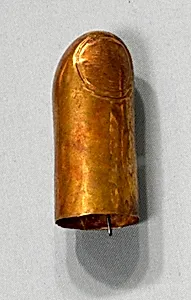
Toe stall
Unknown Artist
ca. 1479–1425 B.C.
Medium
Gold
Dimensions
L. 5.2 × W. 2.3 cm (2 1/16 × 7/8 in.)
Classification
Toe stall, Group 2
Period
New Kingdom
Department
Egyptian Art
Museum
Metropolitan Museum of Art, New York, NY
Credit
Fletcher Fund, 1921–1922
Accession Number
26.8.155
Rights
Public Domain
Art Historical Context
This delicate gold toe stall, dating to around 1479–1425 B.C. during Egypt's New Kingdom (Dyn 18), is a remnant of ancient luxury footwear. Crafted for elite sandals—common among pharaohs and nobility—it would have secured the big toe, allowing a thong strap to hold the sandal in place. the height of Egypt's imperial power under rulers like Hatshepsut Thutmose III, tiny artifact (just 5.2 cm long) offers a glimpse into the refined daily life of the upper classes, where even practical items were elevated to art. Hammered from pure gold, a metal revered by Egyptians for its eternal shine and divine associations with the sun god Ra, the toe stall exemplifies masterful metalworking techniques. Its smooth, curved form fits the foot precisely, showcasing the precision of New Kingdom goldsmiths who transformed raw material into functional jewelry. Gold's rarity and value made such pieces status symbols, often buried with their owners for the afterlife. Today, at the Metropolitan Museum of Art (acquired via the Fletcher Fund in 1921–1922), this toe stall invites us to ponder the blend of utility and opulence in ancient Egypt. Imagine a queen striding through temple courts—her steps adorned with gleaming gold! It reminds us how small objects can reveal grand cultural priorities: beauty, eternity, and hierarchy.