
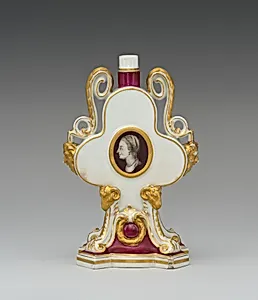
Toilet bottle (one of a pair)
ca. 1760
Medium
Soft-paste porcelain
Dimensions
Height: 7 in. (17.8 cm)
Classification
Ceramics-Porcelain
Culture
British, Chelsea
Department
European Sculpture and Decorative Arts
Museum
Metropolitan Museum of Art, New York, NY
Credit
Bequest of John L. Cadwalader, 1914
Accession Number
14.58.64
Rights
Public Domain
Tags
About this artwork
This soft-paste porcelain by Chelsea Porcelain Manufactory from ca. 1760 represents the artistic and cultural achievements of its period. Ceramic production required specialized knowledge in clay preparation, forming techniques, glazing chemistry, and firing processes. Such objects served both utilitarian and aesthetic purposes, embodying the material culture of their society. The British, Chelsea context provides important background for understanding this piece. This example showcases period c...
Art Historical Context
This delicate toilet bottle, one of a pair crafted by the Chelsea Porcelainufactory around 1760, stands at 7 inches tall and exemplifies the height of British soft-paste porcelain production. Made from a refined clay body mixed with ground glass for a translucent glow, soft-paste porcelain was a prized European innovation before true hard-paste formulas were perfected. Chelsea's artisans mastered complex techniques—from meticulous molding and hand-painting to multi-stage glazing and high-temperature firing—to create objects that rivaled imported Chinese wares. Produced during the rococo era's love for ornate luxury, this bottle likely held perfumes or cosmetics for a gentlewoman's dressing table, blending utility with artistry. Its decoration, featuring portraits of women, reflects the period's fascination with feminine elegance and portraiture, showcasing the manufactory's skill in vibrant enameling and gilding. As part of the Metropolitan Museum of Art's European Sculpture and Decorative Arts collection (bequest of John L. Cadwalader, 1914), it highlights Chelsea's role in establishing Britain as a ceramics powerhouse. Today, this survivor offers a tangible link to 18th-century tastes, inviting us to admire the ingenuity behind everyday opulence and the enduring allure of porcelain's shimmering beauty.
About the Artist
Chelsea Porcelain Manufactory · 1744–1784
**Chelsea Porcelain Manufactory** The Chelsea Porcelain Manufactory, Britain's pioneering porcelain enterprise, was founded around 1743 in Chelsea, London, by two Huguenot silversmiths: Nicholas Sprimont from Liège and Charles Gouyn. Sprimont, trained in Paris as a goldsmith before immigrating to England, brought his expertise in luxury metalwork to the venture, while Gouyn handled early sales th...