
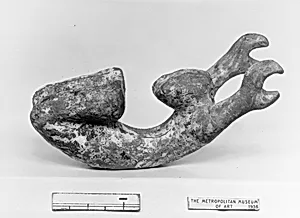
Tomb figure
Unknown Artist
Medium
Dark pottery with traces of color
Dimensions
H. 3 5/8 in. (9.2 cm)
Classification
Tomb Pottery
Culture & Period
China · Han dynasty (206 B.C.–A.D. 220)
Department
Asian Art
Museum
Metropolitan Museum of Art, New York, NY
Credit
Fletcher Fund, 1936
Accession Number
36.12.14
Rights
Public Domain
Tags
Art Historical Context
This petite tomb figure, standing just 3 5/8 inches tall, hails from China's Han dynasty (206 B.–A.D. 220), a golden age of innovation and imperial expansion. Crafted from dark pottery with faint traces of original color, it exemplifies the era's tomb pottery tradition—earthenware objects buried with the deceased to ensure comfort and entertainment in the afterlife. Produced via wheel-throwing and low-fired techniques, these unglazed vessels often featured lively scenes of daily life, their subtle pigmentation hinting at once-vibrant polychrome details that have faded over millennia. Depicting an acrobat in mid-performance, this figure captures the Han fascination with physical prowess and spectacle. Acrobatics were a celebrated form of entertainment at court and festivals, symbolizing harmony between body and spirit. Such miniatures, unlike the grand Terracotta Army of Emperor Qin, served elite tombs, reflecting beliefs in an eternal world populated by joyful attendants. Discovered and acquired through the Fletcher Fund in 1936, it now graces the Metropolitan Museum of Art's Asian Art collection. Step closer to this tiny performer, and you'll glimpse Han China's vibrant soul—where art bridged the living and the eternal, one graceful pose at a time.