
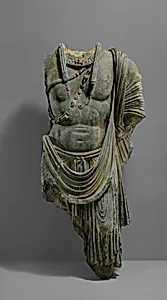
Torso of a Bodhisattva
ca. 5th century
Medium
Schist
Dimensions
H. 64 1/2 in. (163.8 cm)
Classification
Sculpture
Culture
Pakistan (ancient region of Gandhara, mondern Peshawar region)
Department
Asian Art
Museum
Metropolitan Museum of Art, New York, NY
Credit
Purchase, Lila Acheson Wallace Gift, 1995
Accession Number
1995.419
Rights
Public Domain
Tags
Art Historical Context
The Torso of a Bodhisattva, created around the 5th century in the Sahri-Bahlol Workshop of ancient Gandhara (modern-day Peshawar region, Pakistan), stands as a powerful remnant of Buddhist artistic tradition. Carved from schist, a durable stone favored in the region for its fine grain and ability to hold intricate details, the sculpture portrays an idealized male figure embodying compassion and the path to enlightenment. Though missing its head and limbs, the torso conveys a sense of serene strength through its balanced proportions and flowing drapery. Gandharan art flourished at the crossroads of cultures, blending Indian Buddhist iconography with classical influences from the Hellenistic world. This piece reflects that unique synthesis, where local workshops produced monumental sculptures for monasteries and stupas across the region. Its impressive scale—over five feet tall—suggests it once formed part of a larger devotional ensemble, inviting viewers to contemplate the Bodhisattva’s spiritual journey. Acquired by the Metropolitan Museum of Art in 1995, the work highlights the enduring legacy of Gandharan sculptors in shaping Buddhist visual culture across Asia.