
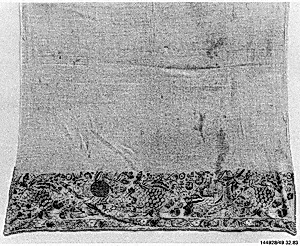
Towel
Unknown Artist
18th century
Medium
Cotton, silk, and metal wrapped thread; embroidered
Dimensions
H. 53 1/4 in. (135.3 cm) W. 26 1/4 in. (66.7 cm)
Classification
Textiles-Embroidered
Department
Islamic Art
Museum
Metropolitan Museum of Art, New York, NY
Credit
Anonymous Gift, 1949
Accession Number
49.32.83
Rights
Public Domain
Art Historical Context
This exquisite 18th-century towel, crafted from cotton, silk, and metalrapped threads through meticulous embroidery, hails from the Islamic world and now graces the Metropolitan Museum of Art's Art department. Measuring an impressive 53¼ by 26¼ inches, it was likely used for personal hygiene or household rituals, such as in hammams (bathhouses), where fine textiles blended utility with artistry. Donated anonymously in 1949, it the everyday luxury of Islamic domestic life during a period of rich textile production across regions like the Ottoman Empire or Persia. The embroidery technique stands out for its opulence: metal-wrapped threads—fine wires coiled around silk cores—add a shimmering, jewel-like quality, elevating a simple towel to a work of wearable art. Such materials were labor-intensive, often produced by skilled women in workshops or homes, reflecting the high status of embroidery in Islamic culture. Geometric patterns, floral motifs, or script (common in the era) would have conveyed blessings, protection, or beauty, merging functionality with spiritual symbolism. As a survivor from the 18th century, this towel offers a tactile glimpse into pre-industrial craftsmanship, reminding us how textiles wove together daily life, trade, and devotion in the Islamic tradition. Visitors, imagine drying off with such splendor!