
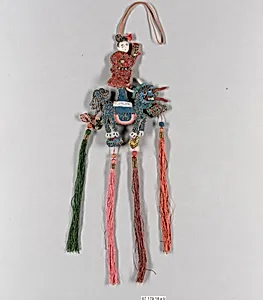
Toy
Unknown Artist
19th century
Medium
Silk and metallic thread embroidery on silk satin and float-patterned plain-weave silk
Dimensions
Overall (a): 2 3/4 x 1 1/2 in. (7 x 3.8 cm) Overall (b): 10 x 4 in. (25.4 x 10.2 cm)
Classification
Textiles-Embroidered
Culture & Period
China · Qing dynasty (1644–1911)
Department
Asian Art
Museum
Metropolitan Museum of Art, New York, NY
Credit
Gift of Florance Waterbury, 1967
Accession Number
67.179.18a, b
Rights
Public Domain
Tags
Art Historical Context
This delicate embroidered "Toy" from China's Qing dynasty (16441911), crafted in 19th century, showcases the era's masterful textile artistry. Made with silk and metallic threads on silk satin and floated plain-weave silk it consists of two components: a small piece measuring 2¾ x 1½ inches and a larger one at 10 x 4 inches. Likely a plaything for children or a decorative miniature, its intricate embroidery highlights the Qing period's opulent craftsmanship, where metallic threads added shimmering realism to motifs of men and mythical creatures—evoking folklore heroes and fantastical beings central to Chinese storytelling. Qing embroidery was a pinnacle of technical skill, blending satin stitches and couching techniques to create textured, luminous surfaces on luxurious silks. These materials, prized for their sheen and durability, were often used in elite households, suggesting this toy might have served both amusement and cultural education, teaching young minds about mythology and moral tales through vibrant imagery. Now housed in the Metropolitan Museum of Art's Asian Art department (gift of Florance Waterbury, 1967), this tiny treasure invites us to marvel at how everyday objects in imperial China fused artistry with imagination, bridging play and tradition.