
Medium
Soft-paste porcelain
Dimensions
6 3/4 × 9 9/16 in. (17.1 × 24.3 cm)
Classification
Ceramics-Porcelain
Culture
French, Sèvres
Department
European Sculpture and Decorative Arts
Museum
Metropolitan Museum of Art, New York, NY
Credit
Bequest of Ella Morris de Peyster, 1957
Accession Number
58.60.12
Rights
Public Domain
Tags
Art Historical Context
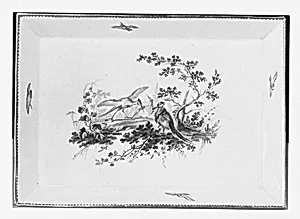
This elegant tray, crafted by the renowned Sèvres Manufactory and painted by Jean-Louis Morin in 1757, exemplifies the height of French porcelain artistry during the reign of Louis XV. Made from soft-paste porcelain—a delicate, translucent material that mimicked costly Chinese imports— it measures 6 3/4 × 9 9/16 inches, perfect for serving delicacies at royal tables or intimate gatherings. Sèvres, the king's official porcelain works near Versailles, revolutionized European ceramics with its innovative techniques and vibrant overglaze enamels. Morin's decoration features birds amid trees, capturing the Rococo style's love for nature's whimsy and asymmetry. These motifs not only showcased technical virtuosity—firing multiple times for lasting color—but also symbolized the era's refined luxury, blending utility with opulent display. Today, this tray graces the Metropolitan Museum of Art's European Sculpture and Decorative Arts collection, a bequest from Ella Morris de Peyster in 1957. It invites us to appreciate how 18th-century French ingenuity turned clay into coveted treasures.
About the Artist
Sèvres Manufactory|Jean-Louis Morin · 1740–present
The Sèvres Manufactory, one of Europe's premier porcelain producers, was established in 1740 as the Manufacture de Vincennes under the patronage of Queen Marie Leszczyńska, who sought to rival Meissen and Chantilly porcelains with French soft-paste innovations. Initially a private venture, it relocated to Sèvres in 1756 in a purpose-built facility designed by architect Laurent Lindet near Madame d...