
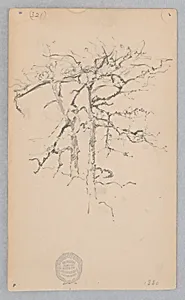
Tree Branch
Classification
nature studies
Department
Smithsonian Collection
Museum
Smithsonian American Art Museum
Credit
Gift of Henrietta Haller
Accession Number
1904-16-333
Rights
Public Domain
About this artwork
Research in Progress
Art Historical Context
**Tree Branch** by Robert Frederick captures the delicate intricacies of nature in this intimate 1880 study. Blum (1857–1903), an esteemed American artist known for his genre scenes and illustrations, often drew inspiration from everyday observations during his prolific career. Active in New York City's vibrant art scene, he was a member of the Tile Club later explored Venetian life, blending American realism with international influences. This nature study exemplifies his keen eye for detail, likely serving as a preparatory sketch to refine his technical prowess. Created during a transformative era for American art—the Gilded Age, when artists increasingly turned to the natural world amid rapid industrialization—"Tree Branch" reflects the tradition of nature studies as foundational exercises. Classified within the Smithsonian American Art Museum's collection, it highlights Blum's versatility beyond his famous watercolors and etchings. Though the medium remains unidentified amid ongoing research, such works were essential for mastering form, texture, and light. Gifted to the Smithsonian by Henrietta Haller, this piece invites visitors to appreciate the quiet beauty of a single branch, symbolizing nature's enduring muse. It reminds us how seemingly simple subjects fueled artistic innovation in 19th-century America. (198 words)