
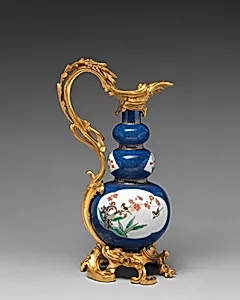
Triple gourd vase (one of a pair)
Unknown Artist
18th century
Medium
Hard-paste porcelain, gilt-bronze mounts
Dimensions
Height: 12 in. (30.5 cm)
Classification
Metalwork-Gilt Bronze
Culture
Chinese with French mounts
Department
European Sculpture and Decorative Arts
Museum
Metropolitan Museum of Art, New York, NY
Credit
The Lesley and Emma Sheafer Collection, Bequest of Emma A. Sheafer, 1973
Accession Number
1974.356.228
Rights
Public Domain
Tags
Art Historical Context
This elegant triple gourd vase, of a pair, stands as a captivating example of 18th cross-cultural artistry, blending Chinese hard-paste porcelain with lavish French gilt-bronze. Measuring 12 inches (30.5 cm) in height, its distinctive gourd shape—symbolizing abundance and prosperity in Chinese culture—likely features delicate bird motifs, a common theme in porcelain decoration that celebrates nature's harmony. Crafted during the Qing dynasty, when Chinese export porcelain flooded European markets via maritime trade, the vase's hard-paste body exemplifies the superior kaolin-based formula developed in China centuries earlier. This material's strength and fine white translucency made it highly sought after, often customized abroad. The added French mounts, with their intricate gilding and bronzework, transformed it into a luxurious decorative object, reflecting the era's chinoiserie craze among European elites. Housed in the Metropolitan Museum of Art's European Sculpture and Decorative Arts department as part of The Lesley and Emma Sheafer Collection (1973), this piece underscores the global exchange of ideas and techniques, bridging Eastern precision with Western opulence for aristocratic homes.