
Ewer from Burghley House, Lincolnshire
Unknown Artist
Chinese porcelain 1573– ca. 1585, British mounts ca. 1585
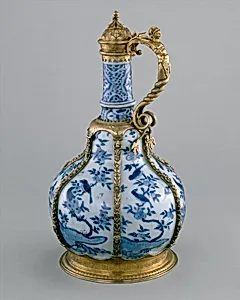
Medium
Hard-paste porcelain, gilded silver
Dimensions
Height: 13 5/8 in. (34.6 cm)
Classification
Metalwork-Silver In Combination
Culture
British, London mounts and Chinese porcelain
Department
European Sculpture and Decorative Arts
Museum
Metropolitan Museum of Art, New York, NY
Credit
Rogers Fund, 1944
Accession Number
44.14.2
Rights
Public Domain
Tags
Art Historical Context
This elegant ewer from Burghley House in Lincolnshire exemplifies the luxurious fusion of East Asian craftsmanship and European metalwork during the late 16th century.ed from high-quality Chinese hard-paste porcelain dated 1573–ca. 1585, its body likely features intricate designs including birds, a hallmark of Ming dynasty export wares from the Wanli period. Around 1585, skilled London silversmiths added ornate gilded silver mounts, transforming the vessel into a functional yet opulent ewer for pouring wine or water, standing at 13⅝ inches tall. The ewer's creation reflects burgeoning global trade routes, as Chinese porcelain—prized for its translucency and durability—reached Elizabethan England via Portuguese and Dutch merchants. Once part of the collection at Burghley House, the grand estate of William Cecil, Lord Burghley (Queen Elizabeth I's chief advisor), it symbolized wealth and sophistication among the Tudor elite. The gilded silver enhancements, with their intricate chasing and gilding techniques, elevated the porcelain's exotic appeal into a status symbol. Today, housed in The Metropolitan Museum of Art's European Sculpture and Decorative Arts department, this hybrid artwork highlights early cultural exchange, blending Chinese underglaze painting with British silversmithing mastery—a testament to Renaissance-era curiosity and connoisseurship.