
Trophy
18th century
Classification
Department
Smithsonian Collection
Museum
Smithsonian American Art Museum
Credit
Gift of Eleanor and Sarah Hewitt
Accession Number
1931-94-551
Rights
Public Domain
About this artwork
Research in Progress
Art Historical Context
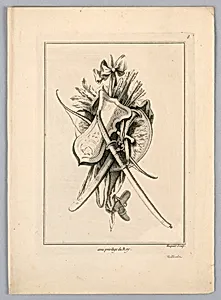
Gabriel Huquier (1695–1772), a prominent French engraver and print of the Rococo era, created *Trophy* in the 18th century Active in Paris, Huquier was renowned for his intricate reproductive prints after masters like Antoine Watteau and François Boucher, capturing the playful elegance and ornamental exuberance of French decorative arts. As a print, this work exemplifies the era's booming print culture, where affordable etchings and engravings disseminated fashionable designs for architecture, furniture, and interiors to a wide audience across Europe. The title *Trophy* likely evokes the elaborate allegorical motifs popular in Rococo decoration—trophies of arms, musical instruments, or artistic tools symbolizing victory, abundance, or the arts. These designs adorned everything from wall panels to silverware, reflecting the opulent tastes of the French aristocracy before the Revolution. Huquier's technical skill in line work and shading brought such motifs to life, making complex compositions accessible and collectible. Now part of the Smithsonian American Art Museum's collection, gifted by Eleanor and Sarah Hewitt, *Trophy* offers a window into 18th-century visual culture. Ongoing research promises deeper insights, but it already highlights prints' role in bridging fine art and everyday luxury.