
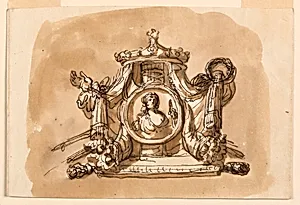
Trophy with allegorical figure
1746–1809
Classification
architecture
Department
Smithsonian Collection
Museum
Smithsonian American Art Museum
Credit
Museum purchase through gift of various donors and from Eleanor G. Hewitt Fund
Accession Number
1938-88-1829
Rights
Public Domain
About this artwork
Research in Progress
Art Historical Context
Giuseppe Barberi (1746–1809), a prominent Italian architect and designer the late 18th century, created *Trophy with Allegorical* during the height of Neoclassicism. This, classified within architecture, exemplifies the era's fascination with symbolic decorations that adorned grand public buildings, palaces, and monuments. Trophies—elaborate assemblages of attributes like shields, laurels, or instruments—often celebrated virtues, victories, or allegorical concepts, blending classical antiquity with contemporary ideals of heroism and enlightenment. The allegorical figure in Barberi's design likely personifies an abstract quality, such as justice or fame, a common motif in neoclassical art that drew from Roman and Greek precedents. Though the medium remains unidentified and research is ongoing, such pieces were typically rendered in drawings, models, or engravings to guide sculptors and builders. Barberi's expertise in ornamental architecture made him a key figure in Rome's design scene, influencing interiors and facades across Italy. Acquired by the Smithsonian American Art Museum through generous donors and the Eleanor G. Hewitt Fund, this trophy highlights the transatlantic appreciation for Italian mastery. It invites visitors to ponder how symbols of triumph shaped civic identity, bridging art and architecture in an age of revival and reason.