
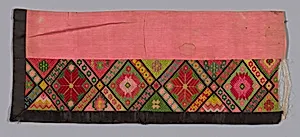
Trouser Band
Qing dynasty (1644–1911), 1875/1900
Medium
Forty-four pairs and eight odd pieces of embroidered sleeve, ankle bands, etc. on gauze.
Dimensions
12.7 × 30.8 cm (5 × 12 1/8 in.)
Classification
costume - embroidery
Department
Textiles
Museum
Art Institute of Chicago
Accession Number
156171
Rights
Public Domain
Art Historical Context
### Trouser Band, Qing Dynasty (1875/1900) Step into the refined world of late Qing dynasty textiles with this delicate *Trouser Band*, crafted by Han-Chinese artisans around 1875–1900. During the Qing era (1644–1911), under Manchu rule, Han Chinese communities preserved and innovated traditional costume elements, blending functionality with exquisite decoration. This small yet remarkable piece (12.7 × 30.8 cm) comprises forty-four pairs and eight odd embroidered bands for sleeves, ankles, and trousers, mounted on airy gauze. It reflects the era's emphasis on embroidered accessories that adorned everyday and ceremonial garments, showcasing the wearer's status and cultural heritage. The medium—fine embroidery on gauze—highlights masterful Chinese textile techniques, where silk threads were meticulously stitched to create durable, ornamental bands. Gauze, a lightweight weave, allowed breathability ideal for China's varied climates, while embroidery added vibrant patterns (though specifics vary by piece). In the Art Institute of Chicago's Textiles collection, this work exemplifies Qing costume artistry, where such bands secured hemlines and cuffs, preventing wear while elevating simple attire to wearable art. Culturally, these bands underscore Han-Chinese ingenuity amid dynastic transition, preserving motifs of prosperity and nature. A testament to anonymous skilled hands, it invites us to appreciate the quiet elegance of imperial China's sartorial traditions.
About the Artist
Han-Chinese
**Han-Chinese** was the collective attribution given to anonymous artisans of Han Chinese descent who crafted intricate embroidered textiles during the Qing dynasty (1644–1911). These makers, active primarily in the late 18th to early 20th centuries, specialized in luxurious garments and furnishings that showcased the pinnacle of Han Chinese needlework traditions. Their early lives and individual ...