
Trousering
Unknown Artist
18th century
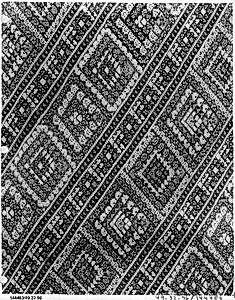
Medium
Linen, silk thread; embroidered
Dimensions
H. 25 1/2 in. (64.8 cm) W. 22 in. (55.9 cm)
Classification
Textiles-Embroidered
Department
Islamic Art
Museum
Metropolitan Museum of Art, New York, NY
Credit
Anonymous Gift, 1949
Accession Number
49.32.96
Rights
Public Domain
Art Historical Context
Step into the world of 18th-century Islamic textiles with *Trousering*, a crafted panel from the Metropolitan Museum of's Islamic Art collection. This rectangular piece, measuring 25½ by 22 inches, is made of sturdy linen embroidered with luxurious silk thread. Likely intended as fabric for trousers—a common garment in Islamic regions known as *shalwar* or *sirwal*—it showcases the exquisite needlework that adorned everyday and ceremonial wear during the period. In the vibrant textile traditions of the Islamic world, embroidery like this was a hallmark of skilled artisanship, often featuring intricate patterns that reflected cultural motifs such as florals, geometrics, or arabesques. Silk thread on linen provided both durability for clothing and a touch of opulence, elevating personal attire into wearable art. Produced anonymously in the 18th century, it highlights the widespread craft practices across empires like the Ottoman or Mughal, where such textiles signified status and regional pride. Gifted anonymously to the Met in 1949, this *Trousering* invites us to appreciate the unsung labor behind Islamic decorative arts. Though the artist remains unknown, its preservation offers a tangible link to the daily lives and aesthetic sensibilities of centuries past.