
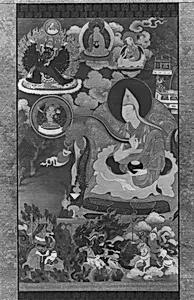
Tsong Khapa
Unknown Artist
18th century
Medium
Distemper on cloth
Dimensions
Framed: 41 1/8 x 23 1/8 in. (104.5 x 58.7 cm) Image: 26 1/4 x 15 3/4 in. (66.7 x 40 cm) Image (with inscription): 27 1/4 x 15 3/4 in. (69.2 x 40 cm)
Classification
Paintings
Culture
Tibet
Department
Asian Art
Museum
Metropolitan Museum of Art, New York, NY
Credit
Gift of Mrs. Robert W. de Forest, 1931
Accession Number
31.128.1
Rights
Public Domain
Tags
Art Historical Context
This 18th-century Tibetan painting portrays Tsong Khapa, the influential philosopher and reformer who founded the Gelug school of Tibetan Buddhism in the 14th century. Created with distemper on cloth—a traditional medium for thangkas—the work served as both a devotional object and a teaching tool, helping practitioners visualize enlightened beings during meditation. The inclusion of horses and deities in the composition reflects Tsong Khapa’s central role in Buddhist iconography, often shown alongside symbols of wisdom and spiritual journey. As a product of Tibetan Buddhist culture, this painting highlights the region’s rich artistic heritage, where anonymous artists passed down techniques across generations to preserve sacred narratives. Its presence in the Metropolitan Museum of Art, gifted in 1931, offers visitors a glimpse into the spiritual and artistic traditions of the Himalayas. The delicate details and vibrant palette typical of such works invite contemplation of themes like enlightenment and compassion that continue to resonate today.