
Manjushri
Unknown Artist
17th–18th century
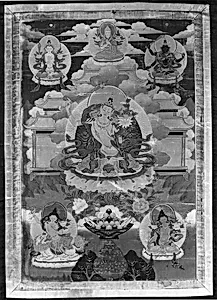
Medium
Color and gold on hemp
Dimensions
Image: 16 3/4 in. × 11 in. (42.5 × 27.9 cm) Overall with mounting: 25 5/8 × 18 1/2 in. (65.1 × 47 cm)
Classification
Paintings
Culture
Tibet
Department
Asian Art
Museum
Metropolitan Museum of Art, New York, NY
Credit
Gift of Albert Angell Southwick, in memory of Mrs. Charles Waterbury Clark, 1960
Accession Number
60.43.9
Rights
Public Domain
Tags
Art Historical Context
This exquisite Tibetan painting depicts Manjushri, the bodhisattva of transcendent wisdom in Vajrayana Buddhism. Revered as the embodiment of prajna—sharp insight that cuts through ignorance—Manjushri often appears wielding a flaming sword to sever delusions and holding a lotus bearing sacred texts. Created by an unknown artist in the17th–18th, this work reflects Tibet's vibrant tradition of devotional art during a period of flourishing monasteries and spiritual patronage under powerful lamas and rulers. Crafted in color and gold on hemp—a durable, locally sourced fiber common in Himalayan painting—this thangka-style piece exemplifies intricate mineral pigments and fine-line detailing typical of Tibetan Buddhist iconography. The lavish use of gold enhances Manjushri's divine aura, illuminating his serene yet fierce expression against a backdrop of symbolic motifs. Measuring about 16¾ × 11 inches, it was likely used for meditation, teaching, or ritual in a temple or private chapel. Now housed in the Metropolitan Museum of Art's Asian Art Department (gift of Albert Angell Southwick, 1960), this painting invites visitors to contemplate wisdom's timeless role in Tibetan culture, bridging art and enlightenment across centuries.