
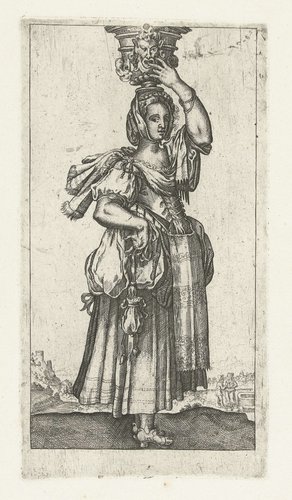
Tuinierster
1612 - 1676
Medium
etching
Dimensions
107; 199
Rights
Public Domain
About this artwork
Plaat in het bezit van Jacques Petit - Horry, Parijs.
Art Historical Context
Abraham Bosse, a Frenchmaker active during the 17th century, created "Tierster" as an etching on a modest scale of 199 by107 millimeters. The title, meaning "female gardener," a scene drawn from daily life, a common theme Bosse's work that reflected the social and occupations of his era Etching allowed artists to produce fine, detailed lines that could be reproduced widely, making such images accessible to a broader audience beyond wealthy collectors. This technique was especially significant in the 1600s, as it supported the growing demand for affordable prints that documented contemporary society. Bosse's precise style often captured ordinary figures with clarity and charm, turning routine activities into enduring records of cultural life. The plate's noted presence in the collection of Jacques Petit-Horry in Paris further underscores its appeal to later connoisseurs who valued these intimate glimpses into the past. Visitors can appreciate how "Tuinierster" exemplifies the era's blend of technical skill and observational interest, inviting reflection on the quiet dignity of everyday labor.
About the Artist
Abraham Bosse · 1602–1676
Abraham Bosse (1604–1676) was a French printmaker and theorist whose approximately 1,600 etchings provide an unparalleled visual record of 17th-century French life. Born to Huguenot parents in Tours, he trained in Paris under Melchior Tavernier and became a devoted follower of Jacques Callot's technical innovations. Bosse's meticulous etchings depicted subjects ranging from daily life and fashion ...