
Tumbler
1850–70
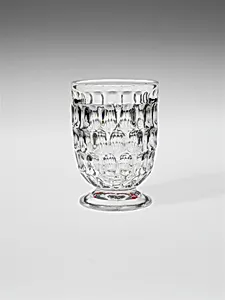
Medium
Pressed glass
Dimensions
H. 3 9/16 in. (9 cm)
Classification
Tumbler
Culture
American
Department
The American Wing
Museum
Metropolitan Museum of Art, New York, NY
Credit
Gift of Mrs. Emily Winthrop Miles, 1946
Accession Number
46.140.134
Rights
Public Domain
Art Historical Context
Step into the world of 19th-century ingenuity with this delicate *Tumbler* crafted by Bakewell, P and Company between 1850 and 1870. Standing just 3 9/16 inches (9 cm) tall, this pressed glass vessel exemplifies the era's booming glassmaking industry in Pittsburgh, where Bakewell—renowned for fine tableware—operated one of the leading factories. Donated to the Metropolitan Museum of Art's American Wing in 1946 by Mrs. Emily Winthrop, it captures the everyday elegance of Victorian households. Pressed glass, the tumbler's medium, revolutionized decorative arts through industrial innovation. Molten glass was poured into intricately carved iron molds and pressed under high pressure, allowing mass production of ornate patterns at affordable prices. This technique democratized luxury, bringing elaborate designs—often mimicking cut glass—to middle-class homes, and highlighted America's shift from handmade crafts to mechanized precision. As a humble yet sophisticated drinking glass, this piece reflects broader cultural shifts: the rise of consumer culture and national pride in manufacturing prowess. Displayed among American decorative arts, it invites us to appreciate how ordinary objects embodied artistic ambition and technological triumph.
About the Artist
Bakewell, Pears and Company · 1836–1882
Bakewell, Pears and Company, Pittsburgh's preeminent glass manufacturer, emerged from the ambitious vision of English immigrant Benjamin Bakewell (1767–1844), who is hailed as the "father of the flint-glass crystal business in America." In 1808, Bakewell acquired a struggling flint glasshouse along the Monongahela River, partnering initially with glassblower Edward Ensell and merchant Benjamin Pag...