
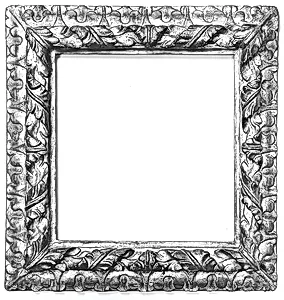
Twisted acanthus leaf frame
Unknown Artist
late 16th century
Medium
Poplar
Dimensions
Overall: 18 11/16 × 20 1/8 in. (47.5 × 51.1 cm) Sight: 12 3/16 × 13 1/16 in. (31 × 33.1 cm) Rabbet: 13 5/16 × 14 3/16 in. (33.8 × 36 cm)
Classification
Frames
Culture
Italian, Venice
Department
Robert Lehman Collection
Museum
Metropolitan Museum of Art, New York, NY
Credit
Robert Lehman Collection, 1975
Accession Number
1975.1.2130
Rights
Public Domain
Art Historical Context
This exquisite *Twisted Acanthus Leaf Frame* from late 16th-century Venice the ornate craftsmanship of Renaissance Italy. Crafted from poplar wood—a lightweight, easily carved hardwood favored by Venetian artisans for its fine grain and workability—the frame features intricate twisting acanthus leaves, a classical motif inspired by ancient Greek and Roman architecture. These scrolling leaves, symbolizing enduring vitality, were a staple in Venetian decorative arts, transforming simple wooden borders into sculptural jewels that elevated paintings. Measuring 18 11/16 × 20 1/8 inches overall, with a sight opening of 12 3/16 × 13 1/16 inches, this frame was designed to encase precious artworks, harmonizing with the opulent styles of Titian or Veronese. In Venice's thriving artistic hub, frames like this were not mere supports but integral to the viewing experience, blurring the line between picture and architecture. Its survival highlights the technical prowess of anonymous woodcarvers, who achieved fluid, dynamic forms through precise rabbet cuts and surface detailing. Now housed in the Robert Lehman Collection at The Metropolitan Museum of Art (acquired 1975), this frame invites us to appreciate the unsung heroes of Renaissance display—reminders that beauty often frames the masterpieces we admire most.