
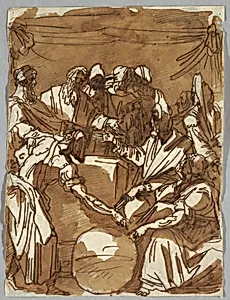
Two Attendants with the Heavenly Horseman
ca. 1820
Classification
figures
Department
Smithsonian Collection
Museum
Smithsonian American Art Museum
Credit
Museum purchase through gift of various donors
Accession Number
1901-39-1169
Rights
Public Domain
About this artwork
Research in Progress
Art Historical Context
**Two Attendants with the Heavenly Horseman *Felice Giani (Italian, 1758–1823), ca. 1820* Felice Giani, a Italian artist of the late Neoclassical period, created this captivating work around 1820, near the end of his prolific career. Trained in Bologna and influenced by masters like Giambattistaanesi, Giani blended classical antiquity with imaginative decoration, often drawing on mythology and heroic themes. Active in Italy and France during the Napole era, he contributed to grand frescoes and architectural embellishments that celebrated imperial grandeur and ancient ideals. This piece, classified as a study of figures, reflects his expertise in rendering dynamic human forms with elegance and poise. The title evokes a celestial drama: two attendants flanking a majestic heavenly horseman, suggesting an allegorical or mythological narrative—perhaps evoking gods, heroes, or divine visions common in Giani's oeuvre. Though the medium remains unidentified amid ongoing research, such works typically showcase his fluid line work and dramatic compositions, bridging Renaissance tradition with emerging Romantic sensibilities. Acquired through museum purchase via donor gifts, it now graces the Smithsonian American Art Museum's collection, highlighting transatlantic appreciation for European mastery. Giani's art reminds us how 19th-century creators reimagined the past to inspire the present, inviting viewers to ponder the interplay of earthly devotion and otherworldly power in this evocative scene. (198 words)