
Two Borders Joined
19th century
Medium
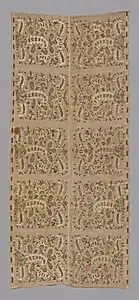
Linen, plain weave; pulled thread work embroidered with linen, silk, and gilt-metal-strip-wrapped silk in hem and overcast stitches; cut and drawn work embroidered in darning and hem stitches; selvages present at top and bottom
Dimensions
146.6 × 62.5 cm (57 3/4 × 24 5/8 in.)
Classification
textile
Department
Textiles
Museum
Art Institute of Chicago
Accession Number
155972
Rights
Public Domain
Art Historical Context
"Two Borders Joined" is a captivating 19th-century textile from the Institute of Chicago's Textiles, measuring an impressive 146.6 × 62.5 cm. Crafted from linen in a plain weave, this panel features two borders seamlessly united, with selvages preserved at the top and bottomevidence of its original woven form. Likely intended as a decorative border for garments, linens, or, it showcases the exquisite handiwork of an anonymous artisan, reflecting the era's appreciation for intricate domestic embroidery. The piece employs advanced techniques like pulled thread work, where threads are drawn taut to form delicate openwork patterns, and cut and drawn work, involving the removal of warp and weft threads followed by darning and hem stitches to create lacy voids. Embellished with linen, silk, and luxurious gilt-metal-strip-wrapped silk in hem and overcast stitches, it gleams with metallic accents, highlighting the maker's skill and access to fine materials. These methods, popular in 19th-century Europe and America, transformed everyday fabric into artful heirlooms. This textile whispers of women's creative labor in the home, preserving cultural traditions through painstaking precision. Its survival offers a window into pre-industrial craftsmanship, where every stitch told a story of patience and pride.
About the Artist
Unknown
The artist designated as "Unknown" in our virtual museum's collection exemplifies a poignant chapter in art history: creators whose identities have faded into obscurity despite the enduring power of their work. With only one known artwork attributed to them in our holdings, this figure represents countless anonymous hands that shaped visual culture across centuries. Museums worldwide, including th...