
Two-Colored Tile
Unknown Artist
15th century
Medium
Fired earthenware with slip decoration and lead glaze
Dimensions
Overall: 4 5/16 x 4 5/16in. (11 x 11cm)
Classification
Ceramics-Tiles
Culture
British
Department
The Cloisters
Museum
Metropolitan Museum of Art, New York, NY
Credit
The Cloisters Collection, 1984
Accession Number
1984.27
Rights
Public Domain
Tags
Art Historical Context
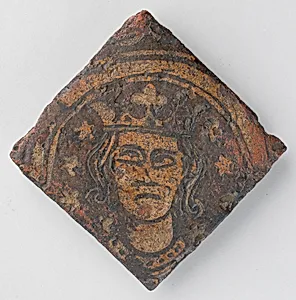
This charming 15th-century British tile, known as *Two-Colored Tile*, offers a glimpse into medieval ceramic artistry. Measuring a modest 4 5/16 x 4 5/16 inches, it features depictions of men's heads, likely rendered in a stylized manner typical of the era's decorative motifs. Housed in The Cloisters at the Metropolitan Museum of Art as part of the 1984 Cloisters Collection, this fired earthenware piece exemplifies everyday yet sophisticated craftsmanship from late medieval England. The tile's medium highlights innovative techniques: slip decoration, where liquid clay is trailed or brushed to create patterns in contrasting colors, is topped with a lead glaze for a glossy, durable finish. This two-toned effect—often greens and browns from copper and iron oxides—produced vibrant, weather-resistant surfaces ideal for flooring, walls, or hearths in homes, churches, and castles. Such tiles were mass-produced in workshops, reflecting the growing accessibility of decorative arts beyond elite patronage. Culturally, these tiles underscore Britain's vibrant tile-making tradition during the 1400s, blending functionality with subtle portraiture. Often symbolizing status or folklore figures, the men's heads invite visitors to ponder their stories—perhaps knights, merchants, or saints—preserving a tactile link to medieval life. A delightful artifact for any virtual tour!