
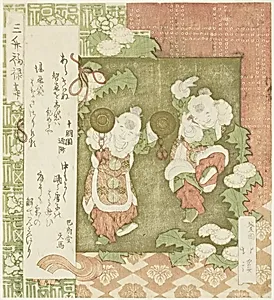
Two dancing karako, from the series "Happiness and Long Life for the Mimasu Group (Mimasu fukurokuju)"
c. 1823
Medium
Color woodblock print; left sheet of shikishiban diptych, surimono
Dimensions
18.7 × 18 cm (7 3/8 × 7 1/8 in.)
Classification
woodblock print
Department
Arts of Asia
Museum
Art Institute of Chicago
Accession Number
81147
Rights
Public Domain
Art Historical Context
Behold the lively charm of *Two Dancing Karako*, the left sheet of a shikishiban diptych surimono by Totoya Hokkei, created around 1823. This compact color woodblock print (18.7 × 18 cm) captures two joyful Chinese boys—karako—in mid-dance, their flowing robes and expressive poses radiating festive energy. Part of the series *Happiness and Long Life the Mimasu GroupMimasu fukurokuju)*, it invokes blessings from Fukurokuju the Shinto god of longevity, celebrating the Mimasu theater troupe amid Edo-period Japan's vibrant kabuki culture. Surimono like this were elite, privately commissioned prints, often produced for New Year's greetings or special patrons. Hokkei, a skilled ukiyo-e artist and pupil of Katsushika Hokusai, excelled in their luxurious techniques: intricate carving for fine lines, vibrant pigments layered through multiple woodblocks, and sometimes mica dusting for shimmer (though not specified here). The square shikishiban format added an intimate, poetic touch, frequently paired with haiku. This artwork exemplifies the playful whimsy of Japanese printmaking, blending cultural reverence for good fortune with theatrical exuberance. Spot the dynamic rhythms in the karako's movements— a snapshot of joy preserved for eternity in the Art Institute of Chicago's Arts of Asia collection.
About the Artist
Totoya Hokkei · 1780–1850
Totoya Hokkei (魚屋 北渓, 1780–1850), born Iwakubo Tatsuyuki in Edo (modern Tokyo), began his life as a humble fishmonger in the Yotsuya Samegahashi district, a trade reflected in his art name "Totoya," meaning fish shop. He transitioned to art through rigorous training, first studying under Kanō Yōsen'in Korenobu, head of the Kobikichō branch of the prestigious Kanō school, where he honed landscape p...