
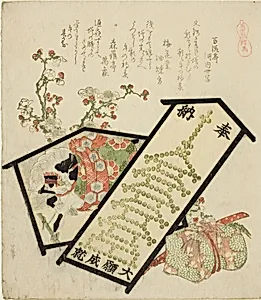
Votive Pictures (Ema), from the series "A Selection of Horses (Uma-zukushi)"
Medium
Color woodblock print; shikishiban, surimono
Dimensions
20.5 × 18 cm (8 1/8 × 7 1/8 in.)
Classification
Department
Arts of Asia
Museum
Art Institute of Chicago
Accession Number
81627
Rights
Public Domain
Art Historical Context
Katsushika Hokus, the legendary Japanese artist renowned for his ukiyo-e woodblock prints like *The Great Wave off Kanagawa*, created *Votive Pictures (Ema)* in 1822 as part of his series *A Selection of (Uma-zukushi)*. This intimate print captures the whimsical tradition of *ema*—small wooden plaques adorned with images or prayers, dedicated at Shinto shrines for good fortune, often featuring animals like horses symbolizing strength and divine favor. Hokusai's playful depiction showcases his mastery in rendering dynamic equine forms, blending everyday devotion with artistic flair during Japan's Edo period (1603–1868). Printed in the luxurious *surimono* format—a square *shikishiban* (20.5 × 18 cm) reserved for private commissions, typically New Year's poetry albums—the work exemplifies advanced woodblock techniques. Vibrant colors were achieved through meticulous carving and mica dusting for a shimmering effect, making these elite prints collector's treasures among literati circles. Unlike mass-produced *ukiyo-e*, *surimono* like this one often included haiku, elevating them as cultural artifacts. Hokusai's series highlights horses' cultural prominence in Japan—from samurai steeds to sacred Year of the Horse symbols—offering a window into 19th-century popular devotion and printmaking innovation. Housed in the Art Institute of Chicago's Arts of Asia department, it invites visitors to appreciate how art intertwined faith, poetry, and nature in everyday life.
About the Artist
Katsushika Hokusai · 1760–1849
Katsushika Hokusai (1760-1849) stands as one of history's most influential artists, a Japanese master who revolutionized the ukiyo-e woodblock print tradition and profoundly shaped Western art. Born in the Katsushika district of Edo (modern-day Tokyo) to an artisan family, Hokusai lived through nearly nine decades of extraordinary creative evolution, adopting over thirty different artistic names t...