
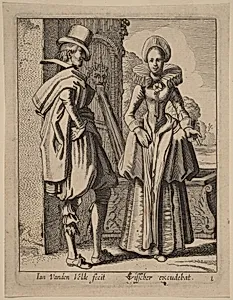
Two Figures in Costume
1551 to 1600
Medium
etching
Classification
Department
CG-E
Museum
National Gallery of Art, Washington, D.C.
Credit
Rosenwald Collection
Accession Number
1943.3.8239
Rights
Public Domain
Art Historical Context
Behold *Two Figures in Costume*, a delicate etching by Dutch artist Jan van de Vel II, created sometime between 1551 and1600. Housed in the National Gallery of Art's Rosen Collection (Department CG-E), this print captures two figures adorned in elaborate period attire, offering a glimpse into the sartorial splendor of the late Renaissance era in the Netherlands. Etching, van de Velde's favored medium, allowed for intricate lines and subtle tonal effects through acid-etched metal plates—a revolutionary technique that bridged the gap between painting and mass reproduction. As a master printmaker from Haarlem, van de Velde contributed to the burgeoning Dutch tradition of detailed genre scenes and figure studies, paving the way for the Golden Age artists like Rembrandt. The costumes here likely reflect the opulent fashion of the time, with ruffled collars and layered fabrics symbolizing social status amid the Dutch Revolt's turbulent backdrop. This work's artistic significance lies in its precision and narrative charm, inviting viewers to ponder the lives behind the finery. A testament to printmaking's power to preserve fleeting moments, it remains a cherished piece for its historical authenticity and technical finesse. (198 words)
About the Artist
Jan van de Velde II · 1593–1641
Jan van de Velde II (1593–1641) was one of the most accomplished Dutch printmakers and draughtsmen of the early seventeenth century, born in Haarlem into a dynasty of celebrated calligraphers and artists. His father, Jan van de Velde I, was a renowned writing master, and his cousin Willem van de Velde the Elder would later become a distinguished marine painter. Jan II studied engraving under Jacob...