
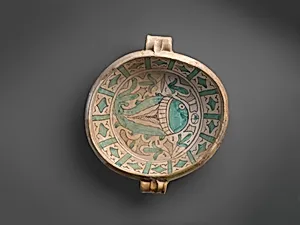
Two-Handled Bowl with Fish
Unknown Artist
1400–1430
Medium
Tin-glazed earthenware
Dimensions
Overall: 3 15/16 x 13 1/16 x 11 7/8 in. (10 x 33.2 x 30.2 cm)
Classification
Ceramics
Culture
Italian
Department
Medieval Art
Museum
Metropolitan Museum of Art, New York, NY
Credit
Rogers Fund, 1910
Accession Number
10.18.1
Rights
Public Domain
Tags
Art Historical Context
This exquisite Two-Handled Bowl with Fish, crafted in Italy between 1400 and 1430, exemplifies the artistry of tin-glazed earthenware, known as maiolica. Measuring about 4 inches high and 13 inches wide, this shallow basin features two sturdy handles and a lively decoration of fish swimming across its surface. The tin glaze—a innovative technique where a tin-oxide layer creates an opaque white ground—allowed artisans to paint vibrant colors that wouldn't fade, making it ideal for both functional tableware and decorative display. Produced during the early Renaissance, when Italian ceramics flourished in workshops from Deruta to Faenza, this bowl reflects the era's blend of medieval traditions and emerging Renaissance naturalism. Fish motifs were popular, evoking the abundance of Italy's coastal waters and perhaps symbolizing prosperity or the Christian theme of abundance from biblical miracles. Such vessels were prized for serving seafood or fruits at banquished feasts, bridging everyday life with artistic expression. Acquired through the Rogers Fund in 1910, this piece now graces the Metropolitan Museum of Art's Medieval Art collection, offering a glimpse into 15th-century Italian craftsmanship and the joy of communal dining.