
Two-handled cup
1729–30
Medium
Silver
Dimensions
3 5/8 × 4 5/8 in. (9.2 × 11.7 cm)
Classification
Metalwork-Silver
Culture
British, London
Department
European Sculpture and Decorative Arts
Museum
Metropolitan Museum of Art, New York, NY
Credit
Bequest of Alphonso T. Clearwater, 1933
Accession Number
33.120.38
Rights
Public Domain
Art Historical Context
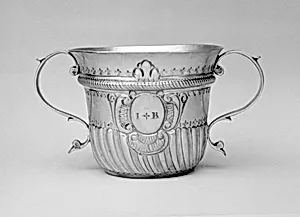
Crafted by London silversmith Robert Pilington between 1729 and 1730, this delicate *Two-Handled Cup* exemplifies the refined artistry of Georgian-era British silverwork. Measuring a modest 3⅝ × 4⅝ inches (9.2 × 11.7 cm), the vessel is fashioned entirely from silver, a luxurious medium prized for its luster, durability, and status as a marker of wealth among the British elite. Its compact form suggests use in intimate social rituals, such as ceremonial toasts or shared libations at the dining table. In early 18th-century London—the epicenter of Europe's silver trade—artisans like Pilkington produced objects blending functionality with opulent design, often bearing hallmarks denoting maker, purity, and date. During George II's reign, such metalwork reflected a burgeoning consumer culture, where silver cups symbolized hospitality and refinement. Two-handled designs, evoking medieval loving cups, encouraged communal drinking, passed hand-to-hand in a circle to build camaraderie. Today, this treasure resides in the Metropolitan Museum of Art's Department of European Sculpture and Decorative Arts, a bequest of Alphonso T. Clearwater in 1933. It invites us to appreciate the silversmith's mastery in shaping silver into enduring elegance, bridging everyday ritual with artistic legacy.