
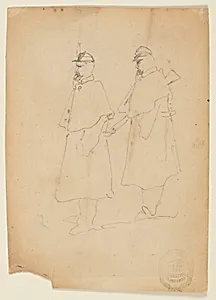
Two Studies of a Sentry
Medium
figures
Classification
figures
Department
Smithsonian Collection
Museum
Smithsonian American Art Museum
Credit
Gift of Charles Savage Homer, Jr.
Accession Number
1912-12-165-a
Rights
Public Domain
About this artwork
Research in Progress
Art Historical Context
**Two Studies of a Sentry**Winslow Homer (1836–1910), a pioneering American Realist painter, created *Two Studies of a Sentry in 1862. This work consists of two figure studies, likely quick sketches capturing the poised vigilance of a sentry—a common motif in Homer's early career. As a gifted illustrator who contributed to *Harper's Weekly*, Homer honed his skills in rendering everyday heroism through precise, unembellished observation. Housed in the Smithsonian American Art Museum as a gift from Charles Savage Homer, Jr., these studies exemplify his shift from commercial art toward profound depictions of American life. Dated to the height of the Civil War, the artwork reflects the era's tensions, with the sentry symbolizing duty and isolation amid national strife. Homer, embedded with Union troops, produced such drawings on-site, emphasizing raw realism over romanticism. The medium of figures—probably pencil or charcoal on paper—highlights his masterful use of line and shadow to convey posture, fatigue, and resolve, techniques that later defined his iconic watercolors and oils of soldiers and seascapes. These modest studies hold cultural weight as windows into 19th-century America, showcasing Homer's eye for the ordinary amid extraordinary times. Though research continues, they invite visitors to ponder the human cost of conflict through an artist's unflinching gaze. (198 words)