
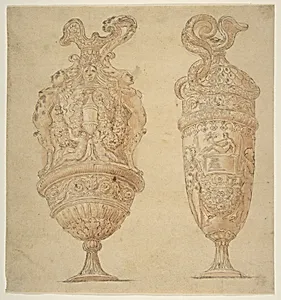
Two Urns Decorated with Human Figures, Animals and Garlands.
Medium
Pen and brown ink, brush with brown and gray wash highlighted with white gouache over traces of graphite
Dimensions
sheet: 9 3/4 x 9 3/16 in. (24.7 x 23.3 cm)
Classification
Drawings|Ornament & Architecture
Department
Drawings and Prints
Museum
Metropolitan Museum of Art, New York, NY
Credit
The Elisha Whittelsey Collection, The Elisha Whittelsey Fund, 1959
Accession Number
59.608.1
Rights
Public Domain
Tags
Art Historical Context
Behold *Two Urns Decorated with Human Figures, Animals andlands*, a captivating preparatory drawing by the Renaissance Mannerist Polidoro da Caravaggioc. 1499–1543). Created in pen and brown ink with brush and brown-gray wash, heightened with white gouache over faint graphite traces, this nearly square sheet (9 3/4 x 9 3/16 in.) showcases two ornate urns brimming with dynamic motifs—graceful human figures, lively animals, and flowing garlands. Polidoro, a pupil of Raphael who later adorned Rome's Palazzo Milesi with innovative facade frescoes in the grotesque style, excelled in such ornamental designs that blended classical antiquity with Mannerist elegance. This work exemplifies the artist's mastery of mixed-media techniques, popular among 16th-century draftsmen for architectural and decorative studies. The intricate line work and subtle washes create depth and movement, evoking the opulent urns of ancient Roman sarcophagi that Renaissance artists avidly revived. Classified under Drawings, Ornament & Architecture at The Metropolitan Museum of Art, it reflects the era's fascination with antiquity amid Rome's artistic renaissance, offering visitors a window into how such sketches informed grand frescoes and sculptures. A gem from The Elisha Whittelsey Collection (acquired 1959), this undated drawing invites us to appreciate Polidoro's whimsical yet refined vision, bridging classical heritage with the inventive spirit of Mannerism.
About the Artist
Polidoro da Caravaggio · 1492–present
Polidoro Caldara, known as Polidoro da Caravaggio, was born around 1499 in Caravaggio, Lombardy, and emerged as one of the most innovative painters of the early Mannerist period. Arriving in Rome circa 1515 as an untrained laborer hauling plaster for the Vatican Logge decorations, he quickly caught the eye of Raphael's key assistant, Maturino da Firenze. By 1517, Polidoro had joined Raphael's work...