
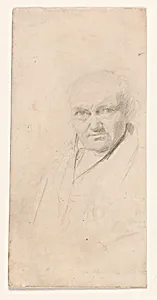
Unidentified Man
c. 1835-44
Medium
Drawing
Classification
Drawing
Department
Smithsonian Collection
Museum
Smithsonian American Art Museum
Credit
National Portrait Gallery, Smithsonian Institution; gift of Sally Adler with heartfelt gratitude to Emma Joy Linen Dana, George L. Linen’s great-granddaughter, and her four devoted sons, Richard, John, Andrew, and Gordon
Accession Number
S/NPG.2018.8.21
Rights
Public Domain
Tags
Art Historical Context
Behold the poignant portrait *Unidentified Man*, a delicate drawing by George Linen (1802–1888), around 1835–1844. This intimate work captures an anonymous sitter in what appears to be a moment of quiet dignity, rendered in the artist's skilled hand during America's antebellum era. Linen, active in the early 19th century, contributed to the burgeoning tradition of portraiture that democratized likenesses for everyday Americans, preserving personal histories amid rapid social change. As a drawing—likely executed in pencil or ink on paper—this piece exemplifies the medium's virtues: its immediacy, portability, and affordability compared to oil paintings. Such preparatory or standalone sketches were prized for their directness, offering candid glimpses into the subject's character without the gloss of formal oils. Housed in the Smithsonian American Art Museum's collection, it reflects the era's fascination with individuality during a time of national expansion and self-definition. A heartfelt gift to the National Portrait Gallery from Sally Adler, honoring George L. Linen's great-granddaughter Emma Joy Linen Dana and her sons, this artwork bridges generations. It invites us to ponder the unidentified man's story—perhaps a family patriarch or local figure—reminding visitors that every face holds untold narratives from our shared past.