
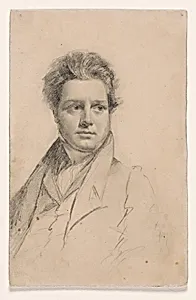
Unidentified Man
c. 1835-44
Medium
Drawing
Classification
Drawing
Department
Smithsonian Collection
Museum
Smithsonian American Art Museum
Credit
National Portrait Gallery, Smithsonian Institution; gift of Sally Adler with heartfelt gratitude to Emma Joy Linen Dana, George L. Linen’s great-granddaughter, and her four devoted sons, Richard, John, Andrew, and Gordon
Accession Number
S/NPG.2018.8.26
Rights
Public Domain
Tags
Art Historical Context
**Unidentified Man** is a compelling portrait drawing by George L (1802–1888), around 1835–1844. Linen, an American artist active in the early 19th century captured this unidentified man's likeness with the precision typical of period portraiture, a popular medium for preserving personal and social identities during a time of rapid national growth in the United States. Drawings like this one served as accessible alternatives to oil paintings, often commissioned by middle-class families to document ancestors or notable figures. The work's historical significance lies in its glimpse into everyday American life amid the Jacksonian era, evoking the era's emphasis on individualism and self-presentation. As a graphite or ink drawing—common techniques for such portraits—it highlights Linen's skill in rendering subtle facial expressions and attire, reflecting cultural values of dignity and restraint. Today, this piece resides in the Smithsonian American Art Museum, thanks to a heartfelt gift from Sally Adler to Emma Joy Linen Dana, Linen's great-granddaughter, and her sons Richard, John, Andrew, and Gordon. This family legacy adds a poignant layer, connecting visitors to the intimate stories behind anonymous faces from America's past. (198 words)