
Unidentified profile portrait, older woman facing right
1773–1820
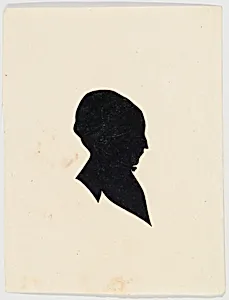
Medium
Cut black paper silhouette
Dimensions
5 1/8 × 3 15/16 in. (13 × 10 cm)
Classification
Cut Paper
Department
Drawings and Prints
Museum
Metropolitan Museum of Art, New York, NY
Credit
Gift of Leopold Heinemann, 1948, transferred from the Library
Accession Number
2013.141.4
Rights
Public Domain
Tags
Art Historical Context
This delicate cut-paper silhouette captures the profile of an unidentified older woman facing right, rendered in stark black paper against an implied light background. Created by an German artist between 177 and 1820, the modest 5 1/8 × 3 15/16 in. (13 × 10 cm) portrait exemplifies the silhouette technique, where intricate details like hair curls, lace collars, and facial contours are achieved through precise scissor work. Housed in the Metropolitan Museum of Art's and Prints department, it entered the collection as a gift from Leopold Heinemann in 1948, transferred from the Library. Silhouettes flourished in late 18th- and early 19th-century Europe, particularly in Germany, as an accessible alternative to painted portraits amid rising middle-class demand for personal mementos. Before photography's invention, these economical "shadow portraits" preserved likenesses with elegant simplicity, often produced by itinerant artists at fairs or homes. This example highlights the medium's artistic merit: its negative space creates dramatic contrast and timeless poise, turning ephemera into enduring folk art. Though the sitter remains unknown, the work invites us to ponder her story—a woman of quiet dignity from a transformative era of Enlightenment and Revolution. A charming glimpse into everyday portraiture, it reminds visitors how ordinary craft can yield profound, shadowy beauty.