
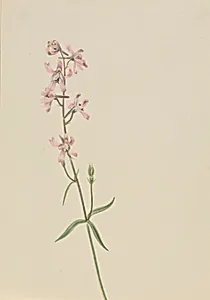
Untitled--Flower Study
ca. 1900-1930
Medium
Painting
Classification
Painting
Department
Smithsonian Collection
Museum
Smithsonian American Art Museum
Credit
Smithsonian American Art Museum, Gift of the artist
Accession Number
1970.355.113
Rights
Public Domain
Tags
Art Historical Context
Mary Vaux Walcott'sUntitled—Flower Study*, created around 1900–1930, is a captivating painting that showcases the artist's deep affinity for nature. Housed in the Smithsonian American Art Museum as a gift from Walcott herself, this work belongs to the Smithsonian Collection and exemplifies her skill in rendering floral subjects with precision and grace. As a flower study, it invites viewers to appreciate the intricate details of petals, stems, and blooms, frozen in time through the medium of painting. Walcott, a trailblazing Canadian-American artist and naturalist1860–1940), bridged the worlds of science and art during an era when women in these fields were rare. Active in the early 20th century, she produced hundreds of watercolor paintings of North American wildflowers, often sketched during rugged expeditions in the Rocky Mountains alongside her husband, paleontologist Charles Doolittle Walcott. Though classified simply as a painting, her technique emphasized botanical accuracy—vibrant colors, fine lines, and lifelike textures—reflecting the scientific illustration tradition while elevating it to fine art. This piece holds cultural significance as a testament to women's contributions to natural history and American art at the turn of the century. Displayed today, it reminds us how Walcott's observant eye not only documented fragile beauty but also preserved it for future generations, blending education with aesthetic delight.