
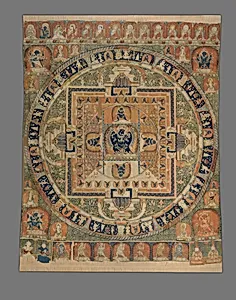
元 緙絲大威德金剛曼陀羅|Vajrabhairava mandala
Unknown Artist
ca. 1330–32
Medium
Silk tapestry (kesi)
Dimensions
Overall: 96 5/8 x 82 5/16 in. (245.5 x 209 cm) Overall (framed and mounted): H. 113 1/2 in. (288.3 cm); W. 90 1/2 in. (229.9 cm); D. 3 3/4 in. (9.5 cm); Wt. 230.3 lb. (104.5 kg)
Classification
Textiles-Tapestries
Culture & Period
China · Yuan dynasty (1271–1368)
Department
Asian Art
Museum
Metropolitan Museum of Art, New York, NY
Credit
Purchase, Lila Acheson Wallace Gift, 1992
Accession Number
1992.54
Rights
Public Domain
Tags
Art Historical Context
This exquisite silk tapestry, or *kesi*, depicts the Vajrabhairava mandala, a sacred Buddhist diagram centered on the fierce deity Vajrabhairava (also known as Yamantaka), who embodies the triumph of wisdom over death. Created in China around 1330–32 during the Yuan dynasty, the work measures nearly eight feet tall and features intricate woven details of the multi-headed, multi-armed deity surrounded by attendant figures, ritual implements, and symbolic elements within a geometric mandala framework. The Yuan period, under Mongol rule, witnessed a flourishing of Tibetan Buddhism at the imperial court, and this mandala reflects that cultural exchange. Emperors such as Toghon Temür actively patronized tantric Buddhist practices, commissioning elaborate artworks that blended Chinese weaving traditions with Himalayan iconography. The tapestry’s impressive scale and complexity suggest it may have served in temple ceremonies or as an imperial offering. *Kesi* tapestry weaving, prized for its ability to mimic painting through fine silk threads, allowed artisans to achieve remarkable precision and luminosity. As one of the finest surviving examples from the era, this piece highlights the technical mastery of Yuan textile artists and the profound role of mandalas in guiding meditation and spiritual transformation.