
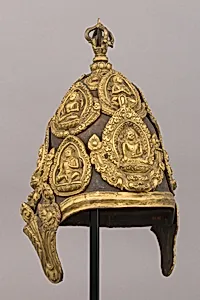
Vajracarya Priest's Crown
Unknown Artist
19th century
Medium
Copper, gold
Dimensions
H. 13 3/4 in. (34.9 cm); W. 8 in. (20.3 cm); D. 7 1/2 in. (19.1 cm); Wt. 2 lb. 10.3 oz. (1199.2 g)
Classification
Helmets
Culture
Nepalese
Department
Arms and Armor
Museum
Metropolitan Museum of Art, New York, NY
Credit
Gift of Bashford Dean, 1906
Accession Number
06.192
Rights
Public Domain
Tags
Art Historical Context
Nestled in the Metropolitan Museum of Art's Arms and Armor department, this Vajracarya Priest's Crown from 19th-century Nepal exemplifies the fusion of spirituality and craftsmanship in Newar Buddhist traditions. Crafted from copper and adorned with gold—likely through gilding techniques—this helmet-like crown measures about 14 inches high and weighs over 2 pounds, underscoring its substantial presence during ceremonies. Donated in 1906 by Bash Dean, it reflects the era's fascination with global artifacts among collectors. Vajracarya priests, "Vajra masters" in Nepalese Vajrayana Buddhism, donned such crowns as symbols of enlightenment and ritual authority. The form evokes protective helmets, blending martial aesthetics with sacred iconography, possibly featuring symbolic motifs like wrathful deities or vajras (thunderbolts representing indestructible wisdom). Worn atop the head during tantric rites, it channeled divine energy, highlighting Buddhism's tantric expressions in the Kathmandu Valley. Artistically, the crown's repoussé work and gilding demonstrate skilled Nepalese metalworking, where copper's durability met gold's luminosity for enduring reverence. Though by an unknown artisan, it captures a vibrant cultural heritage, inviting visitors to ponder the priest's transformative role in bridging the mundane and divine.