
Valance
Unknown Artist
early 18th century
Medium
Silk, metallic thread; on silk
Dimensions
24 x 121 in. (60.96 x 307.34 cm)
Classification
Textiles-Embroidered
Culture & Period
China · Qing dynasty (1644–1911)
Department
Asian Art
Museum
Metropolitan Museum of Art, New York, NY
Credit
Gift of Miss F. Ethel Wickham, 1949
Accession Number
49.81
Rights
Public Domain
Tags
Art Historical Context
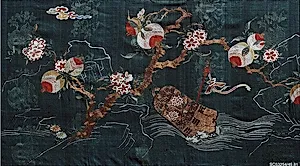
This exquisite valance, a decorative textile likely hung from a bed canopy or canopy frame, hails from early 18th-century China during the Qing dynasty (4–1911). Crafted from silk embroidered with metallic threads on a silk ground, it measures an impressive 24 x 121 inches, its elongated form perfect for draping elegantly across a grand bed. Such opulent textiles were prized in elite households, showcasing the era's mastery of embroidery and symbolizing wealth and refinement. The design features recurring motifs of bells, pomegranates, and trees, rich with cultural symbolism. Pomegranates evoke fertility, abundance, and numerous descendants—auspicious wishes for prosperity—while trees represent longevity and enduring family lines. Bells, often linked to joy and warding off evil, add a harmonious touch. Qing artisans employed intricate stitching techniques, like satin and metal-wrapped threads, to create shimmering effects that caught the light, elevating everyday furnishings to art. A gift to the Metropolitan Museum of Art from Miss F. Ethel Wickham in 1949, this valance offers a window into imperial China's textile traditions, where beauty intertwined with wishes for good fortune.