
Vase
Unknown Artist
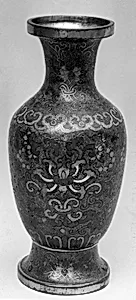
Medium
Cloisonné enamel on copper
Dimensions
H. 7 1/8 in. (18.1 cm)
Classification
Cloisonné
Culture & Period
China · Qing dynasty (1644–1911), Qianlong period (1736–95)
Department
Asian Art
Museum
Metropolitan Museum of Art, New York, NY
Credit
Gift of Edward G. Kennedy, 1929
Accession Number
29.110.81
Rights
Public Domain
Art Historical Context
This elegant cloisonné enamel vase from China's Qing dynasty, specifically the Qianlong period (1736–95), exemplifies the imperial court's mastery of luxury decorative arts. Standing at 7 1/8 inches tall, it was crafted on a copper base, a technique that flourished under Emperor Qianlong, a renowned patron of craftsmanship during an era of political stability and artistic innovation. Such vases were prized possessions, often used in palaces or as diplomatic gifts, reflecting the dynasty's blend of technical precision and aesthetic refinement. Cloisonné enamel, the vase's defining medium, involves soldering thin metal wires—typically gold or silver—onto the copper body to create intricate compartments, or *cloisons*. These cells are filled with colorful enamel pastes, fired multiple times, and meticulously polished to reveal vibrant, jewel-like hues. Perfected in China after influences from the Middle East and Europe, this labor-intensive process peaked in the 18th century, producing objects of extraordinary durability and luminosity that symbolized prosperity and harmony. Today, this vase graces the Metropolitan Museum of Art's Asian Art department, a 1929 gift from collector Edward G. Kennedy. Though its precise motifs remain unrecorded here, it invites us to appreciate the anonymous artisans' skill, bridging centuries of cultural exchange and imperial splendor.