
Vase
Unknown Artist
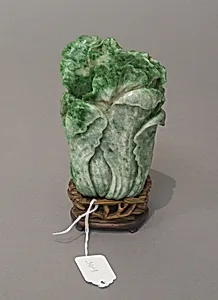
Medium
Jadeite
Dimensions
H. 4 13/16 in. (12.2 cm); W. 3 1/16 in. (7.8 cm); L. 1 15/16 in. (5 cm)
Classification
Jade
Culture & Period
China · Ming dynasty (1368–1644)
Department
Asian Art
Museum
Metropolitan Museum of Art, New York, NY
Credit
Gift of Heber R. Bishop, 1902
Accession Number
02.18.364
Rights
Public Domain
Art Historical Context
This exquisite jadeite vase, originating from China's Ming dynasty (13681644), exemplifies the's mastery of one of the country's most revered materials. Standing just 4 13/16 inches (12.2 cm) tall, with a width of 3 1/16 inches (7.8 cm) and of 1 15/16 inches (5 cm its compact form suggests it was crafted for intimate appreciation, perhaps as a ritual vessel or scholarly table ornament. Jadeite, a vivid green variety of jade prized for its translucency and durability, was arduously sourced from distant mines and meticulously carved by skilled artisans whose identities remain unknown. In Ming China, jade held profound cultural significance, symbolizing purity, immortality, and imperial virtue—a tradition spanning millennia. The dynasty marked a golden age for jade carving, with techniques like incising and polishing achieving remarkable finesse, often rivaling porcelain in refinement. This vase reflects that pinnacle, its smooth surfaces and precise proportions highlighting the material's natural beauty without overt embellishment. Generously gifted to the Metropolitan Museum of Art by Heber R. Bishop in 1902, it now graces the Asian Art department, inviting visitors to ponder the anonymous hands that transformed raw stone into timeless elegance.