
Vase
Unknown Artist
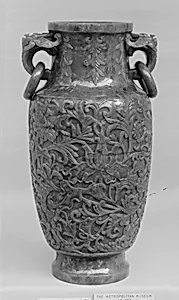
Medium
Nephrite, spinach-green
Dimensions
H. 10 7/16 in. (26.5 cm); W. 5 7/16 in. (13.8 cm)
Classification
Jade
Culture & Period
China · Qing dynasty (1644–1911), Qianlong period (1736–95)
Department
Asian Art
Museum
Metropolitan Museum of Art, New York, NY
Credit
Gift of Heber R. Bishop, 1902
Accession Number
02.18.668
Rights
Public Domain
Tags
Art Historical Context
This elegant spinach-green nephrite jade vase, standing at 10 7/16 inches tall, exemplifies the masterful craftsmanship of China's Qing dynasty during the Qianlong period (6–95). Carved from nephrite—the tougher, more prized variety of jade prized in Chinese culture for its durability and luminous quality—the vase features intricate motifs of flowers and leaves, evoking the natural abundance celebrated in imperial art. Its balanced proportions and smooth, polished surface highlight the stone's natural translucency, a spinach-green hue that was especially coveted for its vibrant, earthy depth. The Qianlong era marked a pinnacle of jade carving under imperial patronage, with workshops producing luxurious objects for the court and elite collectors. These vases often served decorative purposes in scholarly studios or palaces, symbolizing prosperity and harmony through floral designs—common auspicious emblems in Chinese art. Nephrite's resilience allowed artisans to achieve fine details without fracturing, showcasing technical virtuosity. A generous gift to the Metropolitan Museum of Art from Heber R. Bishop in 1902, this anonymous masterpiece invites visitors to appreciate the timeless allure of Chinese jade, bridging artistry and cultural reverence across centuries.