
Vase
Unknown Artist
18th century
Medium
Carnelian and white agate
Dimensions
H. 6 1/2 in. (16.5 cm)
Classification
Hardstone
Culture
China
Department
Asian Art
Museum
Metropolitan Museum of Art, New York, NY
Credit
Gift of Heber R. Bishop, 1902
Accession Number
02.18.866
Rights
Public Domain
Tags
Art Historical Context
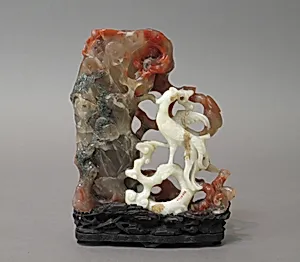
This exquisite vase, crafted in 18th-century China during the Qing dynasty, exemplifies the pinnacle of hardstone carving artistry. Standing at a modest 6½ inches (16.5 cm) tall, it is meticulously fashioned from carnelian—a vibrant red-orange chalcedony—and white agate, materials prized for their durability and luminous translucency. These semi-precious stones allowed artisans to create intricate designs through painstaking techniques like hollowing, polishing, and relief carving, often in imperial workshops where lapidaries showcased their virtuosity. A phoenix motif adorns the vase, a auspicious symbol in Chinese culture representing grace, virtue, prosperity, and the empress herself. Such hardstone vessels were luxury objects, symbols of refinement and imperial taste, used for display or as scholarly accoutrements rather than practical purposes. The contrasting colors of carnelian and agate heighten the phoenix's dynamic form, evoking its mythical flight amid clouds or flames. Generously gifted to the Metropolitan Museum of Art in 1902 by Heber R. Bishop, this anonymous masterpiece invites us to marvel at Qing-era ingenuity, where stone was transformed into living legend.