
Vase
Unknown Artist
first half 17th century
Medium
Stonepaste; underglaze painted and glazed
Dimensions
H. 19 1/2 in. (49.5 cm) Max Diam. 16 1/4 in. (41.3 cm)
Classification
Ceramics
Department
Islamic Art
Museum
Metropolitan Museum of Art, New York, NY
Credit
Edward C. Moore Collection, Bequest of Edward C. Moore, 1891
Accession Number
91.1.139a, b
Rights
Public Domain
Tags
Art Historical Context
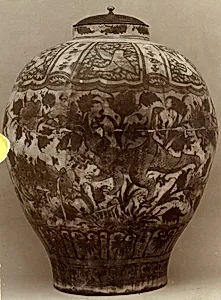
This elegant vase, crafted in the first half of the17th century, exemplifies refined ceramics of the Islamic world, likely from Persia or the Ottoman realms. Standing at 19½ inches tall with a generous 16¼-inch diameter, its stonepaste body—a composite of quartz, clay, and frit—provided a durable, porcelain-like surface prized by artisans who lacked access to true Chinese porcelain. underglaze painting technique, where pigments are applied beneath a transparent glaze before firing, ensured vibrant, long-lasting colors that have endured for centuries. Adorned with motifs of animals and flowers, the vase reflects timeless Islamic decorative traditions. Floral patterns often evoked gardens of paradise, symbolizing abundance and beauty, while animal figures added dynamism and a touch of the natural world. This combination highlights the era's mastery of narrative design on functional yet luxurious objects, used in elite households for display or flowers. Now part of the Metropolitan Museum of Art's Islamic Art collection, gifted through the Edward C. Moore bequest in 1891, this anonymous masterpiece invites us to appreciate the ingenuity of unseen craftsmen whose work bridged utility and artistry.