
Vase
Unknown Artist
probably 18th–19th century
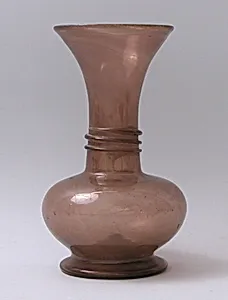
Medium
Glass; blown with applied decoration; tooled on the pontil
Dimensions
H. 7 9 /16 in. (19.2 cm) Max. Diam. 4 5/16 in. (10.9 cm)
Classification
Glass
Department
Islamic Art
Museum
Metropolitan Museum of Art, New York, NY
Credit
Edward C. Moore Collection, Bequest of Edward C. Moore, 1891
Accession Number
91.1.1561
Rights
Public Domain
Art Historical Context
This elegant glass vase, likely crafted in the 18th or 19th century, exemplifies the refined artistry of Islamic glassmaking. Standing at just over 7 inches tall with a maximum diameter of about 4 inches, it was formed using the blown glass technique—a hallmark of Islamic craftsmen who perfected free-blown vessels centuries earlier. The applied decoration, added while the glass was still molten, and the tooled pontil mark (where the blowing iron was detached and finished by hand) highlight the skill of anonymous artisans, who transformed simple silica into functional yet beautiful objects. In the Islamic world, from the Ottoman Empire to Persia and beyond, glassware like this served both practical and decorative purposes in homes, mosques, and palaces. During the 18th–19th centuries, such vases often held perfumes, oils, or flowers, reflecting a cultural appreciation for translucent beauty and subtle luxury. Though the exact origin remains unknown, its presence in the Metropolitan Museum of Art's Islamic Art Department underscores its place in a rich tradition of innovation, where glass rivaled ceramics and metalwork in sophistication. Gifted through the Edward C. Moore Collection in 1891, this vase invites visitors to marvel at the enduring legacy of hands-on mastery, bridging everyday utility with timeless elegance.