
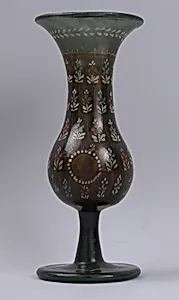
Vase
Unknown Artist
probably 18th–19th century
Medium
Glass; blown, painted, tooled
Dimensions
H. 8 7/8 in. (22.5 cm) Max. Diam. 3 11/16 in. (9.4 cm) Wt. 9.104 oz. (258.098g)
Classification
Glass
Department
Islamic Art
Museum
Metropolitan Museum of Art, New York, NY
Credit
Edward C. Moore Collection, Bequest of Edward C. Moore, 1891
Accession Number
91.1.2058
Rights
Public Domain
Tags
Art Historical Context
This delicate glass vase, likely crafted in the 18th or 19th century within the Islamic world, exemplifies the refined artistry of the period. Standing just under 9 inches tall with a slender profile (maximum diameter of about 3 11/16 inches), it was formed through masterful blown glass techniques—where molten glass is inflated into shape—then meticulously painted and tooled for decorative flourish. The floral motifs, hinted at in its design, reflect a cherished Islamic tradition of nature-inspired ornamentation, evoking gardens as symbols of paradise in art and poetry. In the Department of Islamic Art at The Metropolitan Museum of Art, such vases held practical yet elegant roles, perhaps as perfume containers or table ornaments in affluent households. Blown glass production flourished across regions like the Ottoman Empire and Persia during this era, blending functionality with aesthetic beauty. The tooled details and painted enamels demonstrate skilled craftsmanship, where heat-resistant pigments added vibrant, enduring color without firing the entire piece. A gift from the Edward C. Moore Collection (bequeathed in 1891), this anonymous treasure invites us to appreciate the anonymous makers whose innovations in glassmaking influenced global decorative arts. Weighing a mere 9 ounces, it's a testament to lightweight elegance and technical precision.