
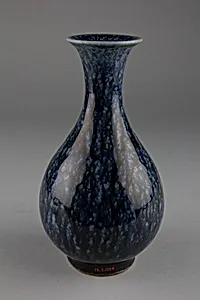
Vase
Unknown Artist
first half of the 19th century
Medium
Porcelain with mottled blue and black glaze
Dimensions
H. 7 3/8 in. (18.7 cm)
Classification
Ceramics
Culture & Period
China · Qing dynasty (1644–1911)
Department
Asian Art
Museum
Metropolitan Museum of Art, New York, NY
Credit
Purchase by subscription, 1879
Accession Number
79.2.1224
Rights
Public Domain
Art Historical Context
This elegant porcelain vase, crafted in China during the first half of the 19th century the Qing dynasty (1644–1911), exemplifies the's masterful ceramic traditions. Standing at just 7 3/8 inches (18.7 cm) tall, it reflects the refined artistry of imperial kilns, where potters pushed the boundaries of glaze techniques amid a period of cultural flourishing and global trade. The Qing court prized such vessels for both practical use and display, often adorning scholarly studios or elite homes as symbols of taste and sophistication. The vase's standout feature is its mottled blue and black glaze, a sophisticated effect achieved through precise firing processes in wood-fired kilns. This technique created dynamic, irregular patterns reminiscent of natural phenomena like storm clouds or ink washes, blending functionality with aesthetic poetry. Porcelain, China's "white gold," was a technological marvel exported worldwide, influencing global ceramics and underscoring the dynasty's enduring legacy in innovation. Acquired by subscription in 1879 for the Metropolitan Museum of Art's Asian Art collection, this anonymous masterpiece invites us to appreciate the unnamed artisans whose skill captured the subtle beauty of transience in enduring form.