
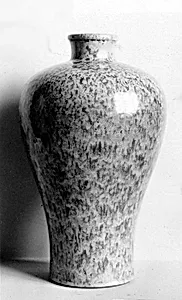
Vase
Unknown Artist
18th century
Medium
Porcelain with mottled blue glaze
Dimensions
H. 10 1/8 in. (25.7 cm)
Classification
Ceramics
Culture & Period
China · Qing dynasty (1644–1911)
Department
Asian Art
Museum
Metropolitan Museum of Art, New York, NY
Credit
Bequest of Mary Clark Thompson, 1923
Accession Number
24.80.269
Rights
Public Domain
Art Historical Context
This elegant porcelain vase, crafted in China during the 18th century under the Qing dynasty (1644–1911), exemplifies the era's mastery of ceramic arts. Standing at just over 10 inches tall, its modest size suggests it was designed for intimate display in a scholar's study or affluent home, where such vessels often held symbolic flowers or served as ornamental accents. The Qing period marked a golden age for Chinese porcelain production, with imperial kilns at Jingdezhen innovating glazes and forms to meet both domestic and export demands, influencing ceramics worldwide. The vase's standout feature is its mottled blue glaze, a sophisticated technique achieved through careful control of firing temperatures and mineral compositions, likely cobalt-based for that rich, uneven blue hue. This mottled effect—reminiscent of clouds or rippling water—adds depth and movement, evoking natural beauty in line with Chinese aesthetic ideals of wabi-sabi-like imperfection. Porcelain, translucent and resonant when struck, was prized for its purity and durability, symbolizing refinement and imperial prestige. Now part of the Metropolitan Museum of Art's Asian Art collection, thanks to the 1923 bequest of Mary Clark Thompson, this anonymous masterpiece invites us to appreciate the anonymous artisans whose skill elevated everyday objects to art. A quiet testament to Qing ingenuity! (198 words)