
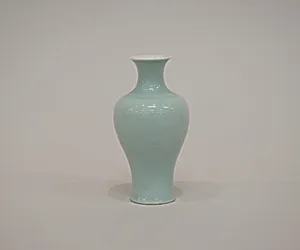
Vase
Unknown Artist
late 18th century
Medium
Porcelain with light blue glaze (Jingdezhen ware)
Dimensions
H. 4 7/8 in. (12.4 cm); Diam. 2 1/2 in. (6.4 cm)
Classification
Ceramics
Culture & Period
China · Qing dynasty (1644–1911), Qianlong period (1736–95)
Department
Asian Art
Museum
Metropolitan Museum of Art, New York, NY
Credit
Bequest of Benjamin Altman, 1913
Accession Number
14.40.28
Rights
Public Domain
Art Historical Context
This delicate porcelain vase, crafted in the late 18th century the Qianlong period (1736–95) of China's Qing dynasty (16441911), exemplifies the mastery of Jingdezhen ware. Standing just 4 7/8 inches tall with a 2 1/2-inch diameter, its petite form and light blue glaze evoke the refined elegance prized by imperial collectors. Jingdezhen, the world's porcelain center, produced these vessels using kaolin clay fired at high temperatures, achieving a translucent, resonant body that revolutionized ceramics. The Qianlong era marked a golden age for Chinese porcelain, blending technical innovation with aesthetic subtlety. The soft light blue glaze—often likened to a serene sky or misty dawn—highlights the potters' skill in controlling subtle color variations without painted decoration. Such vases served as scholarly objects or incense burners, symbolizing harmony and refinement in literati culture. Bequeathed to the Metropolitan Museum of Art in 1913 by collector Benjamin Altman, this anonymous masterpiece invites visitors to appreciate the Qing dynasty's enduring legacy in Asian art, where everyday luxury met artistic perfection.