
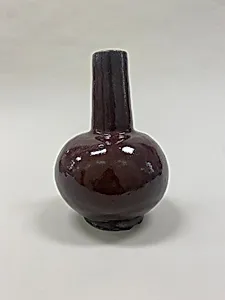
Vase
Unknown Artist
19th century
Medium
Stoneware with reddish brown glaze (Shiwan ware)
Dimensions
H. 6 7/8 in. (17.5 cm); Diam. 4 7/8 in. (12.4 cm)
Classification
Ceramics
Culture & Period
China · Qing dynasty (1644–1911)
Department
Asian Art
Museum
Metropolitan Museum of Art, New York, NY
Credit
Edward C. Moore Collection, Bequest of Edward C. Moore, 1891
Accession Number
91.1.346
Rights
Public Domain
Art Historical Context
This elegant stoneware vase, hailing from China's Qing dynasty (1644–1911) in the 19th century, exemplifies the artistry of Shiwan ware from Guangdong province. Standing at just 6 7/8 inches tall with a 4 7/8-inch diameter, its compact form and rich reddish brown glaze invite close admiration. Shiwan potters were renowned for their masterful glazing techniques on durable stoneware, producing vibrant, earthy tones through high-temperature firing that created a glossy, resilient surface ideal for both daily use and display. Crafted during the Qing era's late flourish in ceramic production, this vase reflects the period's blend of functionality and subtle decoration. While imperial porcelain dominated court tastes, regional wares like Shiwan celebrated bold, localized styles—often featuring molded motifs or vivid glazes—making them accessible treasures for scholars and merchants. The anonymous artist's skill lies in the glaze's warm depth, evoking the earthy hues of southern China's landscapes. Now part of the Metropolitan Museum of Art's Asian Art collection, gifted through the Edward C. Moore bequest in 1891, this piece offers a window into everyday Qing elegance. Visitors will appreciate its tactile allure and the enduring legacy of Chinese ceramic innovation.