
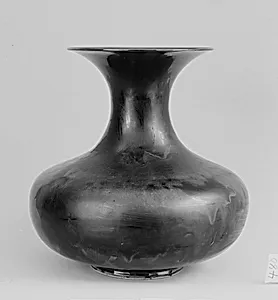
Vase
19th century
Medium
White porcelain covered with a mazarine blue glaze (Kyoto ware)
Dimensions
H. 11 3/8 in. (28.9 cm); Diam. 11 in. (27.9 cm)
Classification
Ceramics
Culture & Period
Japan · Edo (1615–1868) or Meiji period (1868–1912)
Department
Asian Art
Museum
Metropolitan Museum of Art, New York, NY
Credit
Gift of Charles Stewart Smith, 1893
Accession Number
93.3.480
Rights
Public Domain
Art Historical Context
This elegant vase, crafted the renowned Japanese ceramicistuzu Kōzan I (Miyagawa Toranosuke) the 19th century exemplifies the refined artistry of Kyoto ware during the late Edo (1615–1868) or early Meiji (1868–1912) period. at 11 3/8 inches tall with a generous 11-inch diameter, it reflects the era's blend of traditional craftsmanship and emerging innovation as Japan opened to Western influences. Kōzan, a master potter from Kyoto, elevated porcelain production, earning imperial recognition for his technical prowess. The vase's medium—white porcelain coated in a rich mazarine blue glaze—highlights Kyoto ware's signature luminosity and depth. This celadon-like blue, achieved through precise firing techniques, creates a serene, jewel-toned surface that evokes the natural beauty of Japan's landscapes. Such vessels were prized for tea ceremonies, floral arrangements, or as display pieces in elite homes, symbolizing harmony and impermanence in Japanese aesthetics. A gift to the Metropolitan Museum of Art in 1893 from Charles Stewart Smith, this vase offers visitors a tangible link to Japan's ceramic golden age, where form met flawless glazing in pursuit of timeless elegance.