
Vase
Unknown Artist
Medium
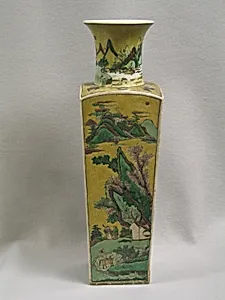
Porcelain decorated with famille verte enamels on the biscuit
Dimensions
H. 19 3/4 in. (50.2 cm); W. 6 in. (15.2 cm); D. 6 in. (15.2 cm); Diam. of rim 5 1/8 in. (13 cm)
Classification
Ceramics
Culture & Period
China · Qing dynasty (1644–1911), Kangxi period (1662–1722)
Department
Asian Art
Museum
Metropolitan Museum of Art, New York, NY
Credit
Gift of Mrs. Walter Sachs, 1964
Accession Number
63.79
Rights
Public Domain
Tags
Art Historical Context
This elegant porcelain vase hails from China's Qing dynasty during the Kangxi period (16621722), a golden age for imperial porcelain production at Jingdezhen kilns. Standing at 19¾ inches tall, it exemplifies the technical mastery of the era, crafted from biscuit porcelain—a matte, unglazed body fired once to a biscuit-like texture—then vibrantly decorated with famille verte enamels. Theseglaze enamels, at lower temperatures, feature a signature palette dominated by rich greens, accented by yellows, reds, and blues, creating luminous, jewel-like effects that defined Kangxi export wares prized worldwide. The vase's surface likely depicts lively scenes of human figures amid towering mountains, evoking the harmonious blend of nature and humanity central to Chinese art. Such motifs drew from literati painting traditions, symbolizing scholarly ideals of retreat and contemplation. Famille verte decoration reached its zenith under Kangxi, showcasing unparalleled precision in enameling techniques that influenced European ceramics. A generous gift to the Metropolitan Museum of Art from Mrs. Walter Sachs in 1964, this vase invites visitors to appreciate the Qing court's fusion of artistry and innovation, bridging East and West in the Asian Art galleries.