
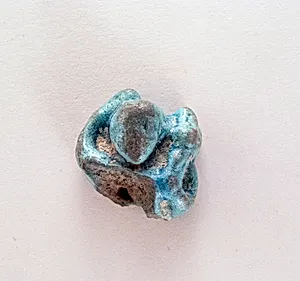
Vase fragment
Unknown Artist
Medium
Terracotta
Dimensions
width 3.18 cm.
Classification
Vases
Culture
Roman
Department
Greek and Roman Art
Museum
Metropolitan Museum of Art, New York, NY
Credit
Gift of J. Pierpont Morgan, 1917
Accession Number
17.194.1699
Rights
Public Domain
Art Historical Context
This delicate terracotta vase fragment, just 3.18 cm in width, offers a tantalizing glimpse into ancient Roman daily life. Housed in the Metropolitan Museum of Art's Department of Greek and Roman Art it exemplifies the ubiquitous pottery produced in the Roman world, where terracotta—fired clay—was a versatile and affordable medium for household vessels. Though the artist and exact date remain unknown, such fragments were likely part of larger vases used for storage, serving, or ritual purposes, reflecting the practicality and artistry of Roman craftsmanship. Terracotta vases like this one highlight Rome's mastery of wheel-throwing and firing techniques, which allowed for durable, mass-produced items that could be plain or intricately decorated. Even in its fragmentary state, this piece underscores the cultural importance of pottery in Roman society, from utilitarian kitchenware to grave goods symbolizing continuity in the afterlife. Its survival speaks to the resilience of ancient materials. Generously gifted to the Met in 1917 by financier J. Pierpont Morgan, this unassuming shard joins thousands of similar artifacts, piecing together the mosaic of Roman innovation and everyday aesthetics. A reminder that history often hides in the smallest details!